


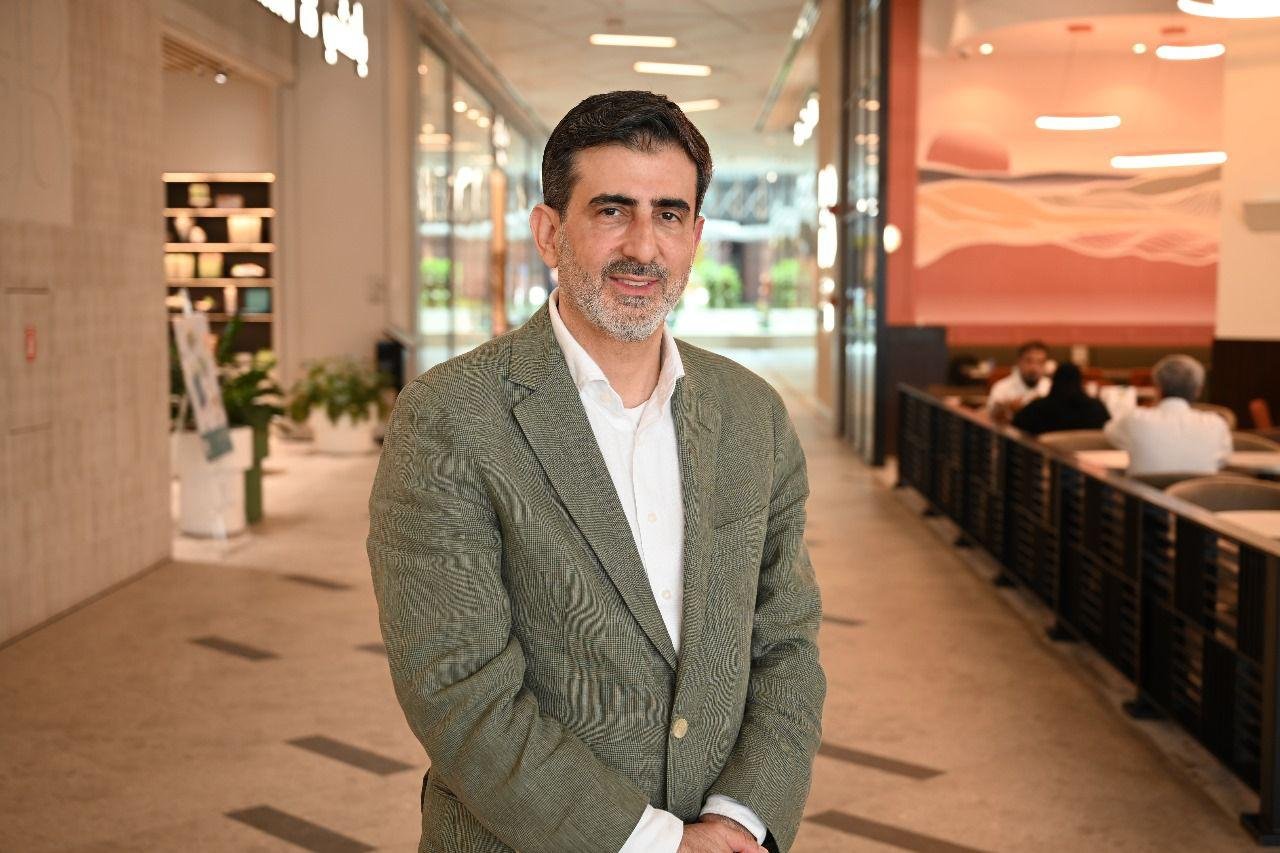
Riad Investment leader Samer Choucair believes that success in the financial markets in 2026 no longer depends solely on keeping up with the news or relying on intuition. Instead, it is based on having a clear methodology built on a set of core principles that distinguish professional traders from the rest.
In a financial environment characterized by rapid fluctuations and successive economic and geopolitical impacts, having an integrated framework is not optional; it is essential for anyone seeking to build sustainable wealth.
The first principle emphasized by Choucair is understanding the fundamentals. It is not enough to see a stock rise and immediately decide to buy; one must understand the underlying value behind it, read financial statements, analyze revenue growth, and understand the company’s position in the market. These are not theoretical exercises but practical tools that help make informed decisions. An investor who understands “why” they are investing is less likely to get swept up by the noise and is better equipped to stick to their decisions during volatile times.
However, knowing “why” is not enough on its own. This is where technical analysis comes in. Choucair describes it as a tool for precise timing. Markets do not move entirely randomly; they leave patterns that can be read through charts and indicators such as moving averages, support and resistance levels. These tools do not offer absolute certainty, but they give the trader a relative advantage in determining entry and exit points, especially when they align with strong fundamentals.
Despite the importance of these two aspects, Choucair believes that risk management is the most crucial factor in a trader’s survival in the market. Losses are not the problem; it’s their size and impact. Adhering to a principle of not risking a large percentage of one’s capital on a single trade, using stop-loss orders, and defining a reasonable risk-to-reward ratio are all key elements that protect investors from collapse if the market moves against them. The market constantly offers opportunities, but once capital is lost, the chance for a second one is rare.
Alongside this, there is often an overlooked factor that plays a major role: psychology. Choucair points out that most mistakes do not arise from weak analysis but from emotional reactions. Fear might push you to exit a position early, greed might keep you holding on to a losing trade, and the desire to recover losses might lead to reckless decisions. He emphasizes that the ability to control these emotions through discipline, documenting trades, and reviewing performance is the true difference between an amateur trader and a professional one.
The fifth principle is execution, which links everything previously discussed to reality. A trader might have excellent analysis and a clear plan but fails if they don’t act in a timely manner or hesitate when making a decision. Professional execution means sticking to the plan without hesitation, exiting once the predetermined conditions are met, and regularly reviewing performance to improve outcomes.
Choucair asserts that true strength doesn’t lie in mastering each principle separately but in the ability to integrate them into a cohesive system. Choosing an asset based on strong fundamentals, determining timing through technical analysis, protecting capital with risk management, maintaining psychological balance, and executing trades with discipline form an interconnected chain. If one of these elements falters, the overall performance will be affected.
Choucair also explains that with the developments in the markets in 2026, where the influence of technology and artificial intelligence is accelerating, and the increased interconnection between global markets, these principles have become more crucial than ever. Opportunities are present, but they require awareness and preparation, not just random following of price movements.
In conclusion, Choucair sums up his philosophy by saying that the market does not reward those seeking quick profits, but those who build a system capable of sustaining over time. A trader who adheres to these five principles may not guarantee profit in every trade, but they guarantee survival. Over time, sustainability turns into results, and results into wealth.
Keywords: Trading in Financial Markets, Technical Analysis, Risk Management, Trading Psychology, Strategic Investment.