


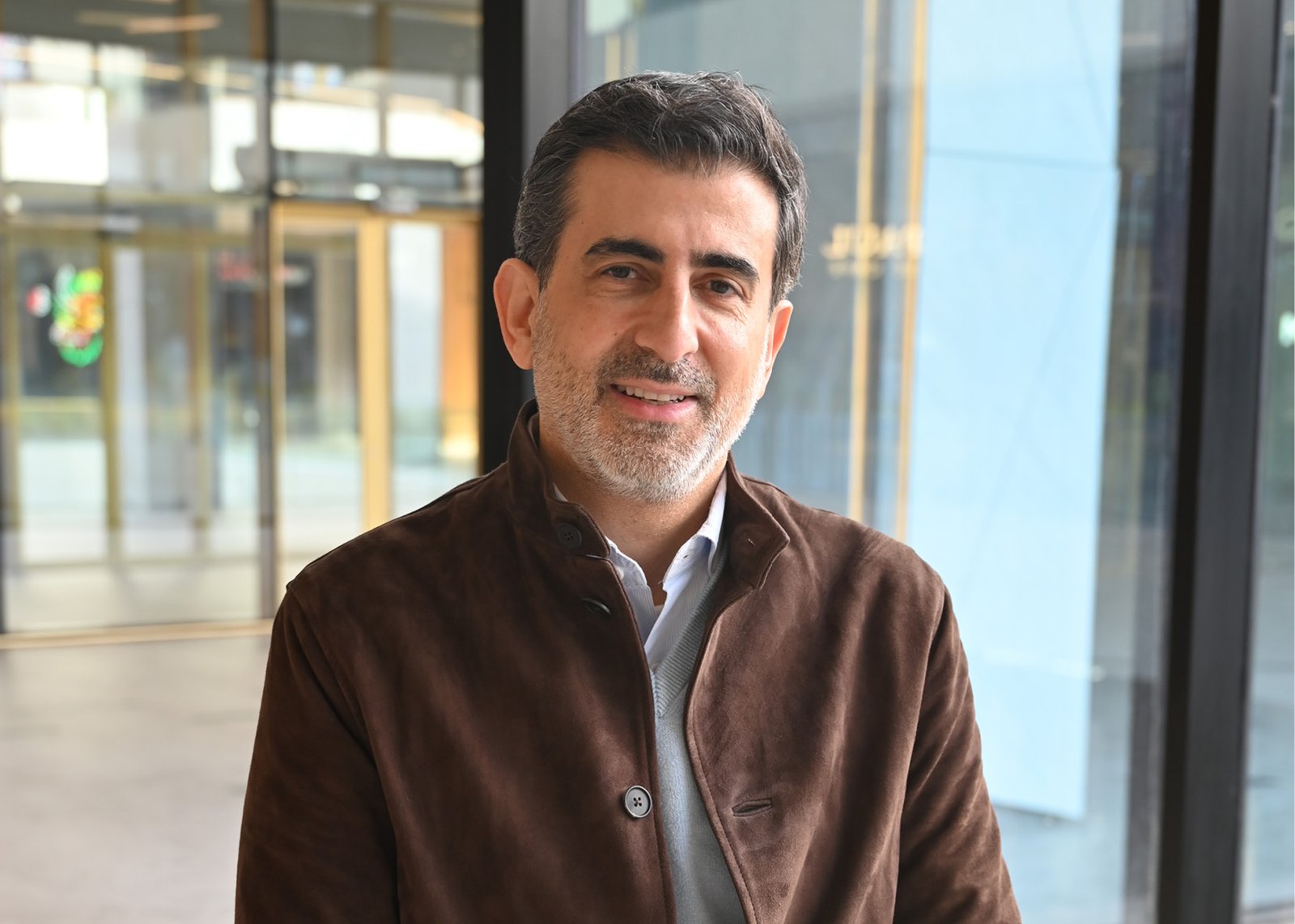
Samer Choucair, investment strategist, stated that the recent decision by Saudi Exchange (Tadawul), in coordination with the Capital Market Authority, to suspend trading in 18 listed companies—11 on the main market and 7 on the parallel market—due to failure to disclose their 2025 financial results within the required timeframe, represents far more than a routine administrative action.
According to Choucair, this move reflects a qualitative shift in the rigor, efficiency, and maturity of the Saudi capital market, positioning it among the most disciplined and transparent markets—not only within emerging markets, but potentially on a global scale.
—
From Procedure to Structural Transformation
The suspension applies for one trading session, with an additional grace period of up to 20 trading days. Failure to comply results in renewed suspension until full disclosure is achieved.
Choucair emphasized that this model embodies a clear regulatory philosophy:
> “Transparency First—without exception.”
From an investment perspective, he argued that this step goes beyond regulation—it represents a re-engineering of investor trust.
> “The Saudi market no longer tolerates gray areas. It is now a binary system: full disclosure or temporary suspension.”
—
Transparency as an Existential Requirement
Choucair noted that absolute transparency has become a non-negotiable condition for corporate survival in the Saudi market.
Key implications include:
Immediate consequences for delayed disclosure
Equal access to information for all investors
Protection against decisions based on incomplete data
Reduced pricing inefficiencies between intrinsic value and market price
This, in turn, enhances the attractiveness of the market to:
Sovereign wealth funds
Global institutional investors
Long-term capital allocators
—
Alignment with Vision 2030
Choucair highlighted that these regulatory actions are fully aligned with Saudi Vision 2030, which aims to position Saudi Arabia among the world’s top 10 financial markets.
He pointed to tangible outcomes already visible:
Record levels of foreign investment inflows
Rising daily liquidity
Strengthened confidence among long-term investors
Accelerated IPO activity across both main and parallel markets
He also emphasized the central role of the Public Investment Fund in supporting strategic sectors and reinforcing market depth.
—
Suspension as a Competitive Advantage
Choucair reframed the concept of trading suspension:
> “This is not a penalty—it is a competitive advantage.”
In advanced markets, clarity, rule consistency, and enforcement are the primary drivers of capital inflows. Saudi Arabia is now aligning with—and in some cases exceeding—these standards.
This is particularly relevant following the Kingdom’s inclusion in major global indices such as:
MSCI Emerging Markets Index
FTSE Russell Index
—
A New Phase: Market Selection and Capital Efficiency
Choucair concluded that the next phase will be defined by market filtration:
Companies with strong governance → higher valuations and sustained inflows
Delayed or non-compliant firms → regulatory pressure and declining investor confidence
Structurally weak entities → gradual marginalization or exit
—
Strategic Conclusion
> “What we are witnessing is not merely a suspension of stocks—it is a strategic message.”
Choucair emphasized that the Saudi market has entered a “hardened” phase of institutional discipline, where:
Transparency protects investors
Governance enhances company quality
Capital allocation becomes more efficient
Saudi Arabia strengthens its position as a global financial hub
In this environment, he concluded:
> “Growth alone is no longer sufficient—institutional discipline is the true differentiator. The companies that respect disclosure today will lead returns tomorrow.”
Samer Choucair: Beijing Views U.S. Involvement in the Middle East as a Historic Strategic Gift
April 2, 2026 — Article
Samer Choucair, investment strategist, stated that the latest cover of The Economist (April 4–10, 2026 issue) carries far deeper implications than a mere editorial stance. He explained that the imagery—featuring Donald Trump in a moment of agitation contrasted with Xi Jinping wearing a composed smile—“captures a Chinese strategic philosophy rooted in patience and the exploitation of adversarial missteps.”
Choucair added that the headline, “Never interrupt your enemy when he is making a mistake,” is not just a quote, but a direct translation of a doctrine inspired by the teachings of Sun Tzu in the management of conflict.
—
The Iran War as a Historic Strategic Opportunity
Drawing on the magazine’s analysis, Choucair noted that a growing consensus within Chinese policymaking circles views U.S. involvement in a potential conflict with Iran not as a crisis—but as a rare strategic opportunity.
> “From Beijing’s perspective, Washington is overextending itself in yet another Middle Eastern theater—echoing Iraq and Afghanistan. China’s strategy is not intervention, but observation and advantage.”
—
Strategic Distraction Creates an Asian Opening
Choucair emphasized that the most immediate consequence of U.S. engagement in the Middle East is strategic distraction.
As Washington reallocates military and logistical resources toward the Gulf, its presence may weaken in critical zones such as:
The South China Sea
Taiwan and the broader Indo-Pacific
> “China had been preparing for a potential confrontation over Taiwan by 2027. Now, it may be presented with a window of opportunity—without direct confrontation costs.”
—
Oil Prices Reshape the Balance Between Beijing and Moscow
Choucair pointed out that rising oil prices—driven by geopolitical tensions—directly benefit Russia, a key strategic partner of China.
At the same time, Beijing continues to:
Secure discounted oil from Russia and Iran
Utilize alternative and non-traditional trade channels
Enhance resilience against Western sanctions
This dynamic, he argued, gives China greater economic flexibility in a fragmented global order.
—
The Yuan Expands While the Dollar Faces Questions
One of the most critical shifts, according to Choucair, is the growing reconsideration of U.S. reliance among Asian and Middle Eastern economies.
China is actively leveraging this moment by expanding the international use of its currency:
Trade agreements increasingly denominated in yuan
Energy deals with Gulf and regional players
Gradual diversification away from dollar dependency
> “Yuan-based trade is no longer theoretical—it is becoming a structural tool in reshaping the global financial system.”
—
The Middle East as China’s Economic Influence Zone
Choucair stressed that U.S. military engagement creates a parallel opening for China to expand economically across the Middle East.
Key developments include:
Acceleration of Belt and Road Initiative projects
Increased investments in ports, railways, and logistics
Expansion into renewable energy and infrastructure
> “China does not enter the region militarily—it enters through economics. That is the real strategic divergence.”
—
A Cover That Reflects a Shifting Reality
Choucair noted that the Economist cover sparked widespread discussion across platforms such as X and WeChat in China, where it was interpreted as an accurate reflection of Beijing’s strategic posture: calm, patient, and opportunistic.
He added that even some U.S. analysts acknowledge that current developments are:
Granting China additional time
Allowing it to strengthen economic and military positioning
Accelerating its long-term strategic ambitions
—
The Arab World Faces a Complex Strategic Equation
Choucair emphasized that these shifts place Arab nations—particularly Gulf states—before a delicate strategic balancing act:
Maintain security alignment with the United States
Expand economic cooperation with China
Meanwhile:
Iran deepens its eastern partnerships
Moderate Arab economies reassess capital flows and investment alliances
Chinese financing becomes increasingly attractive compared to conditional Western support
—
The Era of Chinese Strategic Patience
Choucair concluded that the current moment reflects a fundamental shift in the global balance of power:
> “In 2026, China is no longer intimidated by the United States—it is positioning itself to benefit from its mistakes.”
He added:
> “While Washington moves quickly through military pathways, Beijing advances slowly and deliberately toward economic dominance.”
—
Strategic Conclusion
> “The message is clear: do not interrupt your enemy when he is making a mistake.”
Choucair concluded that the world is undergoing a transformation in real time:
Power is shifting from speed to patience
From military dominance to economic control
From reaction to long-term positioning
> “China is not merely observing—it is rewriting the rules of the game to emerge as the ultimate strategic winner.”