


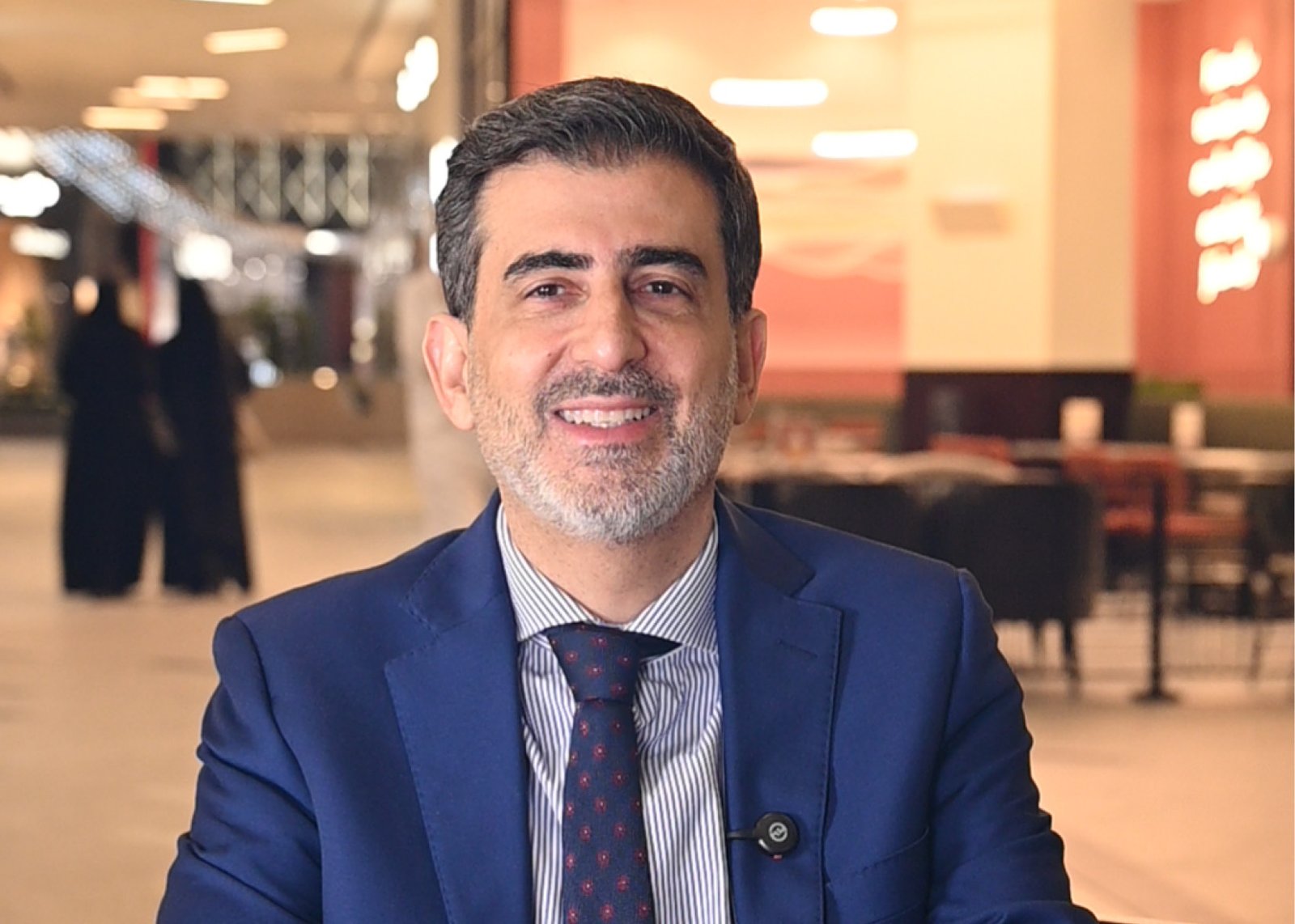
Investment leader Samer Choucair stated that what is happening in the Saudi banking sector today is not just traditional digital growth but a profound transformation reflecting the true reshaping of the national economy. He emphasized that Saudi bank deposits surpassed 3 trillion riyals for the first time at the end of February 2026—a milestone that should not be viewed as a fleeting achievement but as a clear sign of an unprecedented acceleration in the dynamics of money and investment within the Kingdom, driven by a strategic vision that has redefined the relationship between the state and the economy.
Choucair pointed out that what stands out about this leap is not the number itself but the time in which it was achieved. He explained that it took nearly two decades to reach the first trillion, but the third trillion was achieved in less than five years. This sharp acceleration reveals a shift in the economy’s structure, where the growth pace is no longer linear but has become exponential, driven by a complex mix of factors including fiscal policies, large-scale projects, and liquidity flows.
—
Drivers Behind the Surge in Bank Deposits
Choucair explained that this leap didn’t happen in a vacuum. It is a direct result of several interrelated factors. Among these, government deposits have experienced strong growth due to higher oil revenues, which have been directed toward massive strategic projects. Furthermore, individual and private sector deposits also played a key role, with improvements in the labor market and rising income levels leading to higher savings rates, thus bolstering the banks’ financial base.
He also highlighted the shift in investor behavior, particularly with the rise in interest rates since 2022, making high-yield savings products more attractive, which has significantly increased their share in total deposits. This shift reflects a growing financial awareness among individuals and businesses and strengthens the stability of the banking system.
—
The Impact of Vision 2030 on Saudi Banks
Choucair stated that the most significant factor is the profound impact of Vision 2030, which has not only launched colossal projects such as NEOM, Qiddiya, Red Sea, and Diriyah, but has created an integrated economic system continuously pumping liquidity into the market. He added that these projects were not merely investments but tools for recycling capital within the economy, which has enhanced confidence and raised the competitive level among banks to offer more innovative financial solutions.
—
The Path to the Fourth Trillion
Choucair believes that the discussion of the fourth trillion is no longer a question of “if,” but “when.” With the current growth rate nearing 8.8% annually, reaching it within the next three to three and a half years seems like a realistic, albeit conservative, scenario given the current momentum.
He further emphasized that the accumulated liquidity in the banking sector represents more than just deposited money—it is the real fuel for the economic transformation. This liquidity enables banks to finance large projects, support startups, and expand the investment base, creating a sustainable economic cycle based on diversification and innovation.
—
The Broader Economic Transformation
Ultimately, Choucair concluded that what Saudi banks are experiencing today is a direct reflection of a broader strategic transformation. The banking sector has evolved from merely being a financial intermediary to becoming a fundamental partner in shaping the future of the economy. These record-breaking numbers are just the beginning of a new phase that could redefine the Kingdom’s position on the global financial and investment map in the coming years.
—
Keywords:
Saudi Banking Sector, Bank Deposits, Vision 2030, Saudi Economy, Financial Growth