


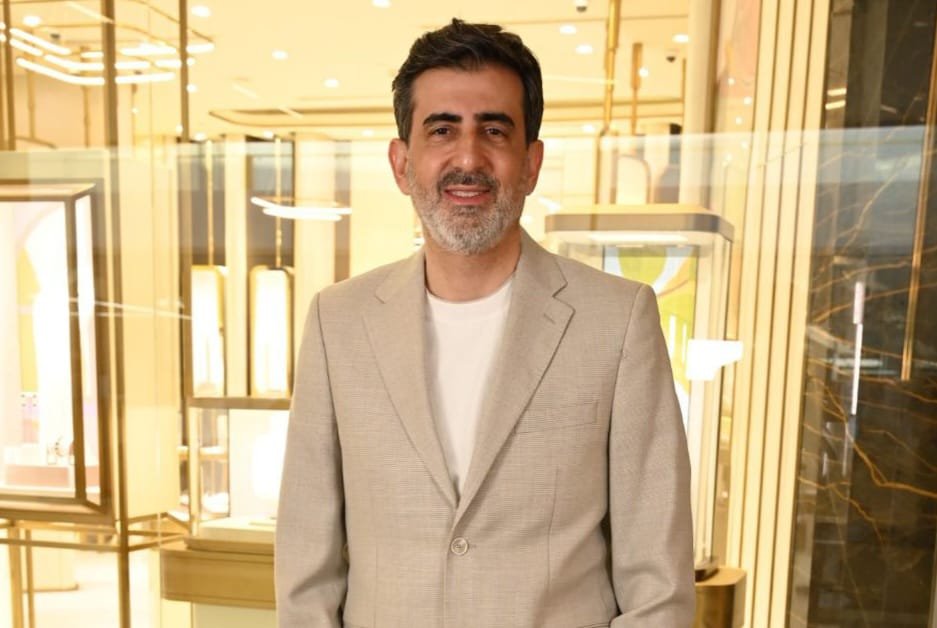
Investment strategist Samer Choucair asserts that global financial markets are approaching a moment that could be historically classified as one of the most transformative economic shifts of the modern era, as SpaceX—led by Elon Musk—prepares for its anticipated initial public offering under the codename “Project Apex.”
Choucair explains that this move could push the company’s valuation into a range between $1.75 trillion and $2 trillion, elevating it beyond the scope of traditional IPOs into what he describes as the starting point of a new paradigm: the “space economy.”
> “This is not merely a public listing of a technology company—it is a structural transition toward an entirely new economic system,” Choucair notes.
—
Beyond an IPO: The Birth of a Multi-Layered Economic Platform
According to Choucair, the scale of “Project Apex” reflects a coordinated global effort, reportedly involving over 21 major international banks, with a potential listing on Nasdaq and the possibility of integration with xAI.
This expansion—anchored by the global satellite infrastructure of Starlink—positions SpaceX not as a rocket company, but as a multi-sector economic platform spanning:
Telecommunications
Defense
Space infrastructure
Artificial intelligence
> “SpaceX is transitioning from a launch provider into a vertically integrated economic system,” Choucair emphasizes.
—
Historical Comparisons: Measuring the Scale of “Project Apex”
Choucair places the anticipated IPO within the context of the largest offerings in history:
Saudi Aramco (2019 IPO)
Raised $25.6 billion
Valued at ~$1.7 trillion
The largest IPO in history
Yet, according to Choucair, SpaceX may surpass it not just in size—but in multi-sector impact
—
Alibaba Group
Raised $25 billion
Transformed global e-commerce
However, remained within the digital economy layer
—
Meta Platforms (Facebook IPO)
Raised $16 billion
Defined the social media economy
SpaceX, Choucair argues, could do the same for space infrastructure
—
Tesla
IPO raised just $226 million
Later reached trillion-dollar valuation
Demonstrates how transformative companies scale post-listing
> “The difference is that SpaceX may begin its journey already at a trillion-dollar scale,” Choucair adds.
—
The Business Model: A Multi-Layered Cash Flow Engine
Choucair highlights SpaceX’s stacked economic model as its key differentiator:
Starlink: Recurring global subscription revenue
Launch services & government contracts: Stable institutional cash flows
Starship program: Long-term infrastructure for what Choucair calls the “Mars economy”
He also points to SpaceX’s quasi-monopolistic position, noting the absence of a private competitor matching its commercial momentum—even with players like Blue Origin.
—
Space + AI: The Most Powerful Data Convergence in History
One of the most critical strategic angles, according to Choucair, is the potential integration with xAI.
> “This would create the largest data platform in history—combining satellite infrastructure, real-time global data, and artificial intelligence.”
Such integration could redefine:
Data ownership
Intelligence systems
Global connectivity
—
Opportunities and Risks: An Investor’s Perspective
Opportunities
Early entry into a sector projected to reach $10 trillion by 2040
Spillover benefits to Gulf markets in:
Telecommunications
Digital infrastructure
Potential participation by sovereign funds such as:
Saudi PIF
Abu Dhabi Investment Authority
—
Risks
Valuation risk (potential asset bubble)
Leadership concentration around Elon Musk
Geopolitical and regulatory challenges related to satellite networks
—
Conclusion: From Earth Economy to Orbital Capitalism
Choucair concludes that the greatest IPOs are not necessarily the largest—they are the ones that create entirely new markets.
> “Just as Amazon evolved from selling books into a cloud computing giant, SpaceX could redefine capitalism itself.”
He frames “Project Apex” as a historic inflection point:
From Earth-based economy → Orbital economy → Planetary economy
> “This moment resembles the birth of the internet or the Industrial Revolution—except this time, humanity is expanding beyond the boundaries of Earth.”
Choucair urges investors to prepare early:
Monitor lock-up periods
Allocate strategic exposure
Understand the long-term structural shift
> “The opportunity is not in the IPO itself—but in understanding the system it is about to create.”
Samer Choucair: Gold and Silver Lose Their Shine in the Worst Month for Metals in Years
Article
Investment strategist Samer Choucair states that global metals markets are currently experiencing one of their sharpest price shocks in years, as April 2026 recorded the worst monthly performance for both precious and industrial metals.
In a strategic analysis, Choucair highlights that:
Silver led the decline, falling 14.11%
Gold dropped 9.79%
Platinum declined 8.78%
Copper fell 4.40%
Lithium showed relative resilience, slipping only 0.39%
Drawing on data from the London Metal Exchange and COMEX, he argues that this downturn reflects a structural shift in global market dynamics, not just a temporary correction.
—
What Triggered the Sell-Off? Four Key Drivers
Choucair attributes the sharp decline to four primary factors:
- A Surging U.S. Dollar
The U.S. Dollar Index (DXY) rising above 110 has repositioned the dollar as the dominant global safe haven, drawing capital away from metals.
—
- Federal Reserve Tightness
Ongoing restrictive policies from the Federal Reserve—particularly elevated interest rates—have increased the attractiveness of bonds relative to non-yielding assets like gold.
—
- Institutional Profit-Taking
Following the historic rally in 2025—when gold exceeded $4,000—institutional investors engaged in widespread profit-taking, accelerating the correction.
—
- Weakening Chinese Industrial Demand
A slowdown in China’s industrial activity has reduced demand for metals, particularly industrial ones like copper.
—
Has Gold Lost Its Safe-Haven Status?
Choucair challenges the idea that gold has lost its role as a safe haven:
> “Gold has not lost its status—but its behavior has evolved.”
He describes the emergence of a “new gold”, one that reacts more to:
Global liquidity
Monetary policy
Dollar movements
…rather than functioning solely as a traditional store of value.
For investors in the Gulf and Saudi Arabia—where gold is deeply embedded in saving and investment culture—the nearly 10% monthly drop represents:
A direct loss for those who bought at the peak
But also a strategic re-entry opportunity at lower valuations
—
Investment Strategy: How to Navigate This Phase
Choucair advises against panic-driven decisions:
> “Selling under pressure turns temporary losses into permanent ones.”
Instead, he recommends a structured portfolio allocation:
60% Gold
30% Silver
10% Industrial metals
—
The Key Indicator: Watch the Dollar
According to Choucair, the U.S. dollar remains the primary signal driver:
A drop in DXY below 108 would represent a strong buy signal for metals
—
Historical Patterns: Corrections Before Rallies
Choucair draws parallels with past crises:
2008 Financial Crisis
2020 Pandemic Shock
2022 Market Reset
In each case, sharp declines were followed by powerful rebounds.
—
Outlook for 2026
Choucair expects:
Short term: Continued volatility
Medium term: Gradual recovery
Year-end target: Gold potentially reaching $4,200–$4,500
—
Conclusion: Not the End—A Shift in the Game
Choucair concludes that this downturn is not the end of the precious metals cycle, but rather a redefinition of investment dynamics.
> “Markets do not reward fear—they reward timing and understanding.”
He urges investors to:
Reassess portfolios
Align with interest rate trends
Closely monitor the dollar
> “This is not a collapse—it is a transition. And those who understand it will position ahead of the next cycle.”