


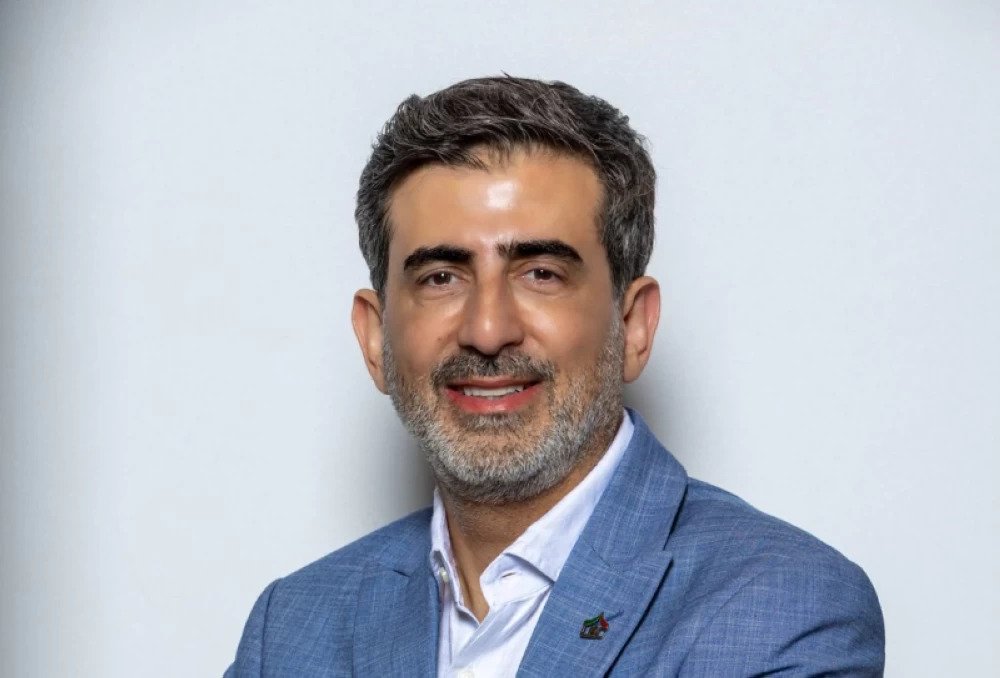
Prominent investment entrepreneur Samer Choucair has delivered a forceful and deeply analytical assessment of the dramatic upheavals shaking global energy markets in recent hours.
His remarks come in the wake of the Iranian strike targeting Qatar’s Ras Laffan facility, an incident that triggered a violent surge in European gas prices, coinciding with robust U.S. economic data that underscores a widening imbalance in global power dynamics.
The Cost of European “Neutrality” When the Bill Precedes the Political Stance
Choucair opened by underscoring a striking and almost ironic contradiction confronting Europe:
“Imagine Europe formally notifying President Trump that ‘Iran’s war is not our war,’ only to awaken to the targeting of the largest gas facility on Earth in Ras Laffan, suddenly finding itself saddled with a political and economic burden it neither anticipated nor prepared for.”
He stressed that circulating reports and imagery dated March 19, 2026 capture a pivotal historical moment, as major European powers deliberately distanced themselves from the conflict. Germany’s defense minister bluntly declared it was “not our war,” France shut its airspace, Spain denied access to its bases, while both the United Kingdom and NATO affirmed their refusal to participate in any coordinated mission.
Choucair added with sharp emphasis:
“Europe regarded the Strait of Hormuz, through which one fifth of global liquefied natural gas flows, as someone else’s problem. But gas is indifferent to political positioning; it responds only to one thing, the ability to pay.”
A Violent Shockwave in TTF Prices and Mounting Storage Pressures
Choucair explained that the immediate fallout from the Iranian strike has been nothing short of devastating for European energy indicators.
European gas prices TTF skyrocketed by 50 percent to 85 percent within mere days.
Spot LNG prices surged by 40 percent to 60 percent.
The European Union now faces the daunting task of injecting an additional 60 billion cubic meters into storage by December to meet a 90 percent target, an objective that has become increasingly unattainable in the aftermath of the strike.
Decoding Europe’s Economic Engine What Exactly is TTF
As part of his technical breakdown, Choucair offered a precise explanation of the Title Transfer Facility TTF, portraying it as the beating heart of Europe’s energy economy.
“TTF is a virtual trading hub based in the Netherlands and has served as Europe’s primary gas pricing benchmark since 2010. It boasts exceptional liquidity and facilitates the seamless electronic transfer of gas ownership without requiring immediate physical delivery. Today, this index dictates heating costs for 450 million Europeans, shapes electricity pricing, and directly impacts the industrial competitiveness of Germany and France.”
He issued a stark warning. A continent unwilling to deploy even a single naval asset to safeguard critical maritime corridors now finds itself compelled to procure gas at record breaking prices in a marketplace it chose not to defend.
The United States and Saudi Arabia Resilience and Strategic Ascendancy
Across the Atlantic, Choucair highlighted the formidable resilience of the U.S. economy, citing data released on March 19, 2026 by the U.S. Department of Labor showing unemployment claims dropping to 205,000, the lowest level since January, reinforcing the strength and adaptability of the American labor market despite intensifying geopolitical turbulence.
Regarding Saudi Arabia, Choucair characterized the Kingdom as a clear strategic beneficiary of the crisis. Despite a limited strike on the Ras Tanura refinery, the broader impact tilts decisively in its favor as the world’s leading oil exporter.
He elaborated:
“Elevated energy prices significantly bolster Aramco’s revenues, reinforce the ambitions of Vision 2030, and unlock new avenues for energy exports to a Europe desperately seeking reliable alternatives. Saudi Arabia, as the linchpin of OPEC+, wields decisive influence over the stabilization of global energy markets.”
History’s Relentless Echo
Choucair concluded with a sobering reflection:
“The crisis of 2026 reiterates a brutal and enduring truth. Short sighted policies yield punishing consequences. Europe opted for the illusion of political safety, only to incur a steep price in the energy markets. The pressing question now is whether Europe will internalize this lesson before the crisis escalates into a catastrophe surpassing the scale of the 2022 Ukraine crisis.”