


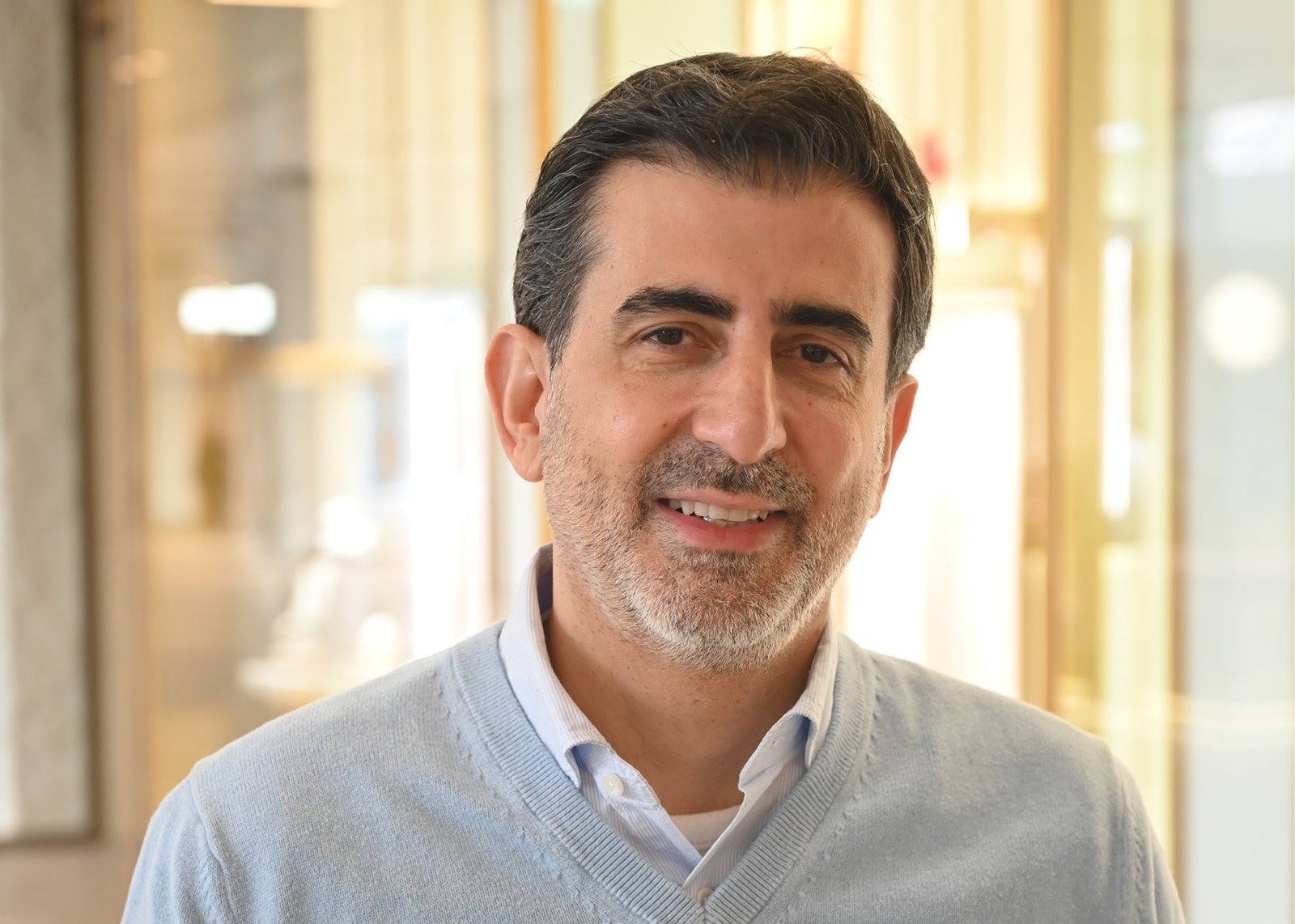
Venture investor Samer Choucair stated that the geopolitical landscape in 2026 is approaching a critical inflection point, noting that the administration of Donald Trump is reportedly considering a highly consequential option: asserting control over Kharg Island, which accounts for approximately 90% of Iran’s oil exports.
He emphasized that such a move, if realized, would not merely constitute a military maneuver, but rather a fundamental reshaping of the global energy equation, with direct implications for oil flows, energy prices, and investment opportunities.
Choucair further noted that roughly 20% of global oil supply transits daily through the Strait of Hormuz, making any disruption capable of driving prices to a range of $120 to $150 per barrel under an escalation scenario.
—
Kharg Island: The Core of Iran’s Oil Economy
Choucair explained that Kharg Island, despite its modest size of less than 20 square kilometers, represents the backbone of Iran’s oil economy.
He remarked:
“The paradox is that this small island carries a geo-economic weight far exceeding its physical scale.”
The island is equipped to handle supertankers and hosts fully integrated infrastructure, including storage facilities and loading terminals operating around the clock, making it the primary bottleneck for Iran’s oil exports.
“Any disruption at Kharg,” he stressed, “would effectively halt the flow of oil revenues to Tehran almost immediately.”
—
Military Feasibility: Possible to Seize, Difficult to Hold
Choucair pointed out that reports by The Economist have outlined potential military intervention scenarios, including airborne assaults and special operations, leveraging the island’s proximity to the Gulf and its limited geographic footprint.
However, he cautioned:
“Initial control may be tactically achievable, but the real challenge lies in sustaining it.”
He elaborated that the island’s proximity to the Iranian mainland exposes it to precision missile threats, adding:
“Iran possesses deterrence capabilities that render any prolonged presence highly risky.”
While control over Kharg could grant Washington significant leverage, it may simultaneously open the door to broader regional escalation.
—
Oil Under Shock: Price Scenarios
Choucair stated that markets have already begun pricing in geopolitical risk, noting:
“If merely threatening the Strait of Hormuz can push prices upward, introducing the Kharg factor amplifies the effect significantly.”
He outlined a spectrum of scenarios, ranging from full-scale escalation—potentially pushing oil prices above $150 per barrel—to a negotiated outcome restoring relative stability within the $90 to $110 range.
He further highlighted that a disruption of 1.5 to 2 million barrels per day of Iranian oil would create a supply gap, adding:
“This gap will not persist for long—it will be filled by the most responsive producers, led by Gulf countries.”
—
The Gulf as a Beneficiary—With Caution
Choucair affirmed that Gulf states would be among the primary beneficiaries of such developments, explaining:
“Higher prices would bolster revenues for major oil companies and provide Gulf producers with an opportunity to expand their market share.”
He added that countries such as the UAE, Kuwait, and Qatar would also benefit—either through oil or liquefied natural gas exports—stating:
“Global demand will immediately seek reliable alternatives, and the Gulf stands as the foremost option.”
However, he warned against excessive optimism:
“Economic gains may be accompanied by heightened geopolitical risks if the escalation broadens.”
—
Mapping Investment Opportunities: Where Capital Flows
Choucair emphasized that crises tend to redistribute wealth rather than destroy it, observing:
“The intelligent investor does not ask whether there is a crisis, but where the opportunity lies within it.”
He noted that major energy companies would be among the most prominent beneficiaries, alongside defense industry firms due to rising military expenditure.
He also highlighted the resurgence of gold as a safe haven:
“In times of uncertainty, investors invariably return to tangible assets.”
Additionally, he pointed out that renewable energy projects in the Gulf could benefit in the medium term, as the urgency to diversify energy sources intensifies.
—
Risks: The Other Side of Opportunity
Choucair stressed that the outlook is not without significant risks, stating:
“We are entering an environment that may witness sharp oil price volatility of up to 30% within short periods.”
He warned of a broader regional escalation scenario:
“Any expansion of the conflict could disrupt navigation across the Gulf entirely, with far-reaching global consequences.”
He also highlighted the potential for capital outflows from emerging markets and rising global inflationary pressures driven by elevated energy prices.
—
The Smart Investor’s Strategy: Navigating the Landscape
Choucair asserted that navigating this phase requires a deep understanding of market fundamentals:
“Do not react to headlines—respond to the underlying structure of the market.”
He emphasized that diversification remains the cornerstone of strategy, advising against excessive direct exposure to oil and instead favoring companies with strong and resilient cash flows.
He also underscored the importance of allocating a portion of portfolios to gold as a hedging instrument, alongside building measured positions in the defense sector, noting that timing of entry is critical to achieving returns.
Addressing Gulf investors specifically, he remarked:
“Do not distance yourselves from your domestic markets—they will become a natural destination for capital flows in the event of escalation.”
—
Kharg: A Test of Global Power Balances in 2026
Choucair concluded by emphasizing that Kharg Island is far more than a geographic entity—it is a pivotal node in global energy dynamics.
“If it is used as a bargaining chip and the Strait of Hormuz is reopened, we may witness a relatively swift stabilization. However, if it evolves into an open confrontation, global markets will face a profound test.”
He concluded:
“Crises do not destroy wealth—they reveal who was prepared. Those who move with composure and anticipate events are the ones who will write their gains in the next cycle.”