


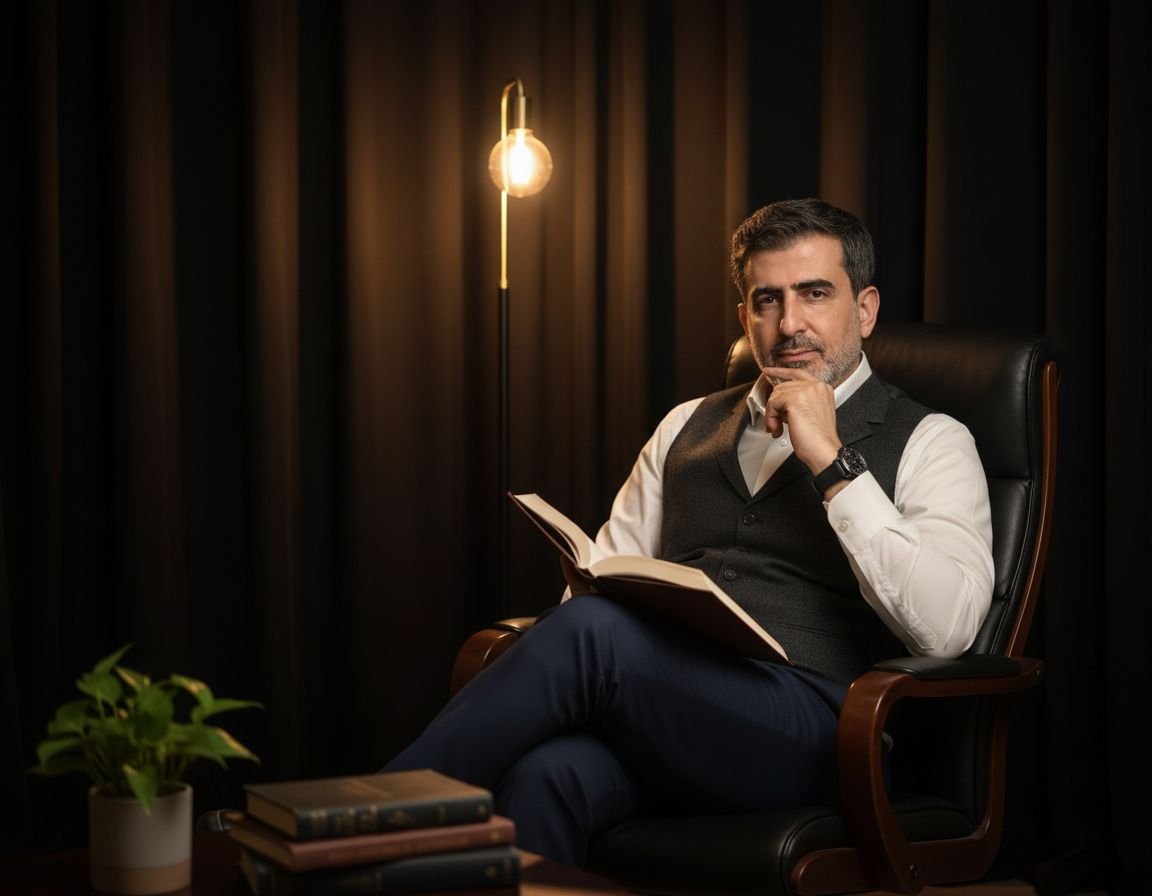
Investment strategist Samer Choucair asserts that gold has once again taken center stage as the most important defensive asset in 2026, emphasizing that the recent price pullback should be viewed as a strategic entry window—not a cause for concern.
Choucair’s remarks come in response to updated projections from Goldman Sachs, which forecast gold reaching $5,400 per ounce by the end of the year, signaling that the market is still in the early phase of a structural bull cycle.
—
A Pullback Within a Structural Uptrend
According to Choucair, gold trading around $4,670 per ounce in April 2026, despite a roughly 13% correction, aligns with a broader global shift driven by four key forces:
- Unprecedented Sovereign Demand
Central banks continue to accumulate gold at an estimated pace of ~60 tons per month, reflecting a strategic move to diversify reserves and reduce reliance on fiat currencies.
—
- Anticipated U.S. Rate Cuts
Expected easing by the Federal Reserve enhances the appeal of non-yielding assets like gold.
—
- Shift Toward Real Assets
Investors are increasingly treating gold as a long-term financial hedge, particularly amid energy volatility and macro uncertainty.
—
- Healthy Market Reset
The recent decline reflects a positioning reset, clearing speculative excess and building a stronger base for the next upward move.
> “This is not weakness—it is structural consolidation before continuation,” Choucair explains.
—
A Broad Institutional Consensus
Choucair highlights that multiple global banks are reinforcing the bullish outlook:
JPMorgan Chase: ~$6,300 per ounce
UBS: ~$6,200 per ounce
Deutsche Bank: ~$6,000 per ounce
This growing consensus suggests that gold is no longer just a traditional safe haven—it is becoming a core pillar of modern wealth management, particularly in regions like the Gulf.
—
Investment Strategy: Positioning for 2026
Choucair stresses that the current dip represents a short-term repricing within a long-term uptrend, recommending immediate positioning for:
Inflation protection
Energy market volatility
Geopolitical hedging (especially around key chokepoints like Hormuz and Bab al-Mandeb)
He suggests allocating 5% to 15% of a portfolio to gold, depending on individual risk tolerance.
—
Five Rules for Smart Gold Investing in 2026
Choucair outlines a disciplined framework:
- Diversify exposure
Combine physical gold, ETFs, and mining equities
- Track macro signals
Monitor Federal Reserve decisions and inflation data
- Avoid excessive leverage
Volatility can amplify downside risks
- Think in cycles, not headlines
Any dip toward $3,800–$4,000 should be treated as accumulation
- Leverage regional platforms
Utilize Sharia-compliant investment vehicles in Gulf markets
—
Tactical Risks vs. Structural Direction
While maintaining a bullish stance, Choucair warns of short-term risks such as:
A sudden strengthening of the U.S. dollar
Delays in rate cuts
However, he emphasizes that these are tactical fluctuations, not trend reversals.
—
Conclusion: The Beginning of a New Gold Cycle
Choucair concludes that the world is entering a major gold cycle driven by financial system restructuring—not just fear.
> “When gold reaches $5,400, the real question won’t be whether to buy—it will be why investors missed the opportunity at $4,600.”
In his view, gold is no longer just a defensive asset—it is becoming a strategic cornerstone in a rapidly evolving global financial order.
Samer Choucair: SpaceX Could Reach a $1.75 Trillion Valuation
Article
Investment strategist Samer Choucair believes the world may be approaching one of the boldest moments in financial market history, as SpaceX reportedly moves toward a confidential IPO filing, according to leaks from major media institutions.
He explains that this step is not just another listing:
> “This is not simply an IPO—it marks the beginning of a new era of space capitalism, where deep technology meets the largest pools of global capital.”
Preliminary estimates suggest a valuation between $1.5 trillion and $1.75 trillion, with the potential to raise up to $75 billion, positioning it as possibly the largest IPO in history.
—
Why Now? A Precisely Timed Strategic Move
Choucair emphasizes that the timing is far from random, but rather driven by three major strategic forces:
- Business Model Maturity
SpaceX has evolved beyond a launch provider into a multi-layered platform, led by:
Starlink as a global digital infrastructure player
Expanding commercial and government launch services
> “This is no longer a rocket company—it’s an integrated infrastructure platform.”
—
- The Acceleration of the AI Economy
Choucair highlights the potential convergence with xAI as a signal of future integration between:
Space infrastructure
Artificial intelligence systems
This could eventually enable:
Off-earth data centers
Ultra-low latency communication networks supporting AI models
—
- Market Appetite for Dominance Narratives
In 2026, global investors are no longer chasing incremental growth—they are seeking “future dominance stories.”
> “SpaceX represents one of the clearest narratives of long-term technological supremacy.”
—
Could Elon Musk Become the First Trillionaire?
Choucair notes that Elon Musk owns approximately 42% of SpaceX, implying a stake worth over $700 billion at a $1.75 trillion valuation—excluding his other assets.
However, he cautions:
> “The market can grant that title—but it can also take it away quickly.”
The path to becoming the first trillionaire depends on:
Sustained valuation post-IPO
Strong, consistent cash flows from Starlink and space operations
—
The Investment Opportunity: Between Vision and Reality
Choucair describes the IPO as a historic entry point into the space economy, offering exposure to:
Satellite internet expansion in emerging markets
Reusable launch technologies (a near-monopoly advantage in some areas)
However, he warns of key risks:
Extremely high valuation expectations
Operational risks (launch failures, technical issues)
Public market pressure on a previously private company
He draws parallels with Tesla, noting its history of sharp swings between optimism and correction.
—
A Deeper Shift: Redefining Capital Markets
Choucair argues that this IPO represents more than a financial event—it signals a structural transformation in how innovation is funded:
From traditional tech firms → to planetary-scale platforms
From terrestrial infrastructure → to space-enabled economies
From conventional investing → to long-term bets on the future itself
> “SpaceX is not just building products—it is building an entire economic system.”
—
Strategic Advice for Arab Investors
Choucair urges investors—especially in the Arab world—to approach the opportunity with discipline:
Study the prospectus carefully (real insights lie beyond headlines)
Avoid hype-driven decisions
Allocate only a limited portion of the portfolio to high-risk, high-reward opportunities
Maintain liquidity, as the best opportunities often emerge after corrections
> “The smartest capital doesn’t chase the moment—it prepares for what comes after it.”
—
A Historic Moment—But Not an Easy One
Choucair concludes that SpaceX’s IPO could mark the beginning of a new era of mega-listings that combine deep technology with global capital flows.
> “In every major transformation, wealth is not built by early entry alone—but by deep understanding.”
He leaves investors with a defining perspective:
> “The future is not only being written in space—it is being priced every day in financial markets.”